
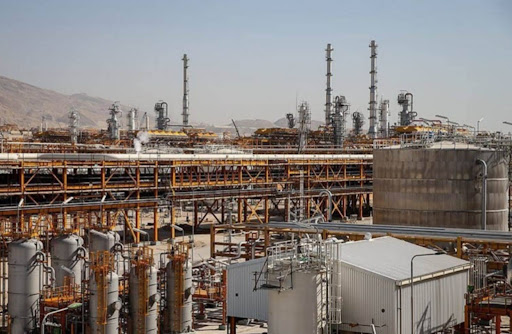
Oil prices lurched toward $110 a barrel Wednesday after Iran threatened to attack Gulf energy facilities in response to Israeli strikes on the South Pars gasfield — the largest natural gas reserve in the world. The Revolutionary Guards named specific refineries and complexes in Saudi Arabia, the UAE, and Qatar and ordered workers to evacuate. The announcement marked the most direct threat to Gulf energy infrastructure seen in the conflict so far.
South Pars had been kept out of the conflict by an implicit agreement between the US, Israel, and Iran to limit targeting of oil and gas infrastructure. That arrangement collapsed Wednesday when Israeli missiles struck the field, reportedly with US authorization. The decision marked a clear escalation and immediately triggered Iran’s most explicit retaliatory threats of the war.
Iran’s state media listed Saudi Arabia’s Samref refinery and Jubail complex, the UAE’s al-Hosn gasfield, and Qatar’s Mesaieed and Ras Laffan facilities as imminent targets. Evacuation orders were issued alongside the names. Asaluyeh’s governor Eskandar Pasalar described the war as having entered a “full-scale economic” phase and called the US-Israeli strike “political suicide.”
The oil benchmark climbed to $108.60 a barrel, just below $110, while European gas futures rose more than 7.5%. Gulf oil exports had already fallen 60% from pre-war levels due to infrastructure damage and Iran’s Strait of Hormuz blockade. Iran had continued to ship its own crude through the strait while blocking its neighbors’ exports — a strategic asymmetry that had given Tehran significant economic leverage.
Qatar’s government spokesperson called on all parties to halt attacks on energy infrastructure, warning of grave consequences for global energy security and the environment. The warnings from Doha and other Gulf capitals underscored how seriously the region’s governments viewed the threat. With Iran’s stated window for retaliation already open, the world was watching one of the most consequential energy standoffs in modern history.